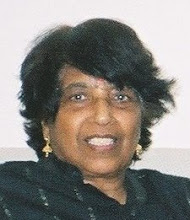
Maya Prajapati, Buddha's foster mother repeatedly asked him to admit her into the Sangha but he never wished to do that. Finally after Ananda's recommendations she was the first woman to be admitted and was followed by a number of Bhikkunis.
May 19, 2007
Maya Prjapati
Maya Prajapati, Buddha's foster mother repeatedly asked him to admit her into the Sangha but he never wished to do that. Finally after Ananda's recommendations she was the first woman to be admitted and was followed by a number of Bhikkunis.

Narthakipati
The original Nikaya story is about a young son of a rich man falling in love with a beautiful girl from a touring acrobatics group and leading a nomadic life with them. When he feels insulted by his wife as a good for nothing person he becomes a perfect acrobat himself. But on seeing Buddha's calm face from the top of his acrobat's stick, he jumps down and walks away towards him leaving his family and profession for good. This basic story is changed by the present composer to make it more dance worthy. The acrobat group is portrayed here as a dance troupe with the young girl as an accomplished dancer. The rich man's son falls madly in love and runs away from his family against his father's wishes to marry her. After they get a son, his wife insults him unintentionally as a factotum for the troupe. Stung to the quick, he runs away and returns an accomplished dancer while his wife had in the meanwhile given up dancing. His family and friends then arrange a grand performance by him for Sariputta, Buddha's great disciple. Sariputta is greatly impressed but explains that all human emotions are tension producing and teaches him the ninth Rasa of Shanta or peace as an integral part of dance. This altered story highlights the Buddhist contribution to the aesthetics of dance namely shanta Rasa, though this contribution was not actually appreciated and incorporated till the mid 7th century through Harsha's Naganandam.
Buddhavatara or Maya's Dream

This dance drama portrays the story of Buddha's birth. Queen Maya who is pregnant goes to the fabled Lumbini garden with her retinue. As they entertain themselves with singing and dancing Queen Maya gives birth. At the ensuing palace celebrations the court astrologers predict a glorious future as the world's greatest prophet for the child who is to become Lord Buddha.
Arya Satyam
Arya Satyam starts with the five Brahmin puritan ascetics going to the Sarnath deer park to hear Buddha's first sermon being shown the way by prancing deer. Buddha preaches his four noble truths; suffering, its cause, its removal and the eightfold path (Ashtangika Marga) to achieve it. The ascetics praise him and ask him for illustrations to be able to preach it. Buddha asks them to stay with him for a few days to see them illustrated.
In the second scene, Kissa Gotami plays a ball game with her son who dies suddenly of snake bite. She takes the dead child to Buddha asking him to revive him. Buddha tells her to go get a handful of mustard seeds from some family where there has been no death. Failing in this, she realizes the universality of human misery.
In the third scene, Buddha's disciple Sariputta is asked to cure a mad youth, a sculptor. He sculpts the image of a beautiful bride and his parents go out to find one like that. They actually find one but she dies on the way. The youth goes mad, hugging the statue all the time. Sariputta explains the cause of suffering as "thrushna" or "desire' to him and preaches the control of desire.
In the fourth scene, two philosophers are quarrelling in the street in front of Sujata's house. The Ajivika recommends total abstinence and the Charvaka total dedication to pleasure. Sujata comes out and silences them and explains how peace of mind can be achieved by the middle path of self discipline or Ashtangika Marga.
The drama concludes with a tillana in praise of Buddha.
In the second scene, Kissa Gotami plays a ball game with her son who dies suddenly of snake bite. She takes the dead child to Buddha asking him to revive him. Buddha tells her to go get a handful of mustard seeds from some family where there has been no death. Failing in this, she realizes the universality of human misery.
In the third scene, Buddha's disciple Sariputta is asked to cure a mad youth, a sculptor. He sculpts the image of a beautiful bride and his parents go out to find one like that. They actually find one but she dies on the way. The youth goes mad, hugging the statue all the time. Sariputta explains the cause of suffering as "thrushna" or "desire' to him and preaches the control of desire.
In the fourth scene, two philosophers are quarrelling in the street in front of Sujata's house. The Ajivika recommends total abstinence and the Charvaka total dedication to pleasure. Sujata comes out and silences them and explains how peace of mind can be achieved by the middle path of self discipline or Ashtangika Marga.
The drama concludes with a tillana in praise of Buddha.
Angulimala

This drama is based on a powerful confrontation between a dacoit chief Angulimala who cuts off the fingers of the victims he robs and the noble queen Khema. Stressing the contrast and intensifying the encounter, Angulimala is represented as awesome and boastful, in masculine Kathakali style and the queen is portrayed as poised and majestic, in Bharatanatyam style.
On hearing that the queen will be passing through his territory, Angulimala is enraged and vows to destroy her guards. When the queen arrives Angulimala chases away her guards and mocks her. She retorts that she is well protected by Buddha's Dhamma and flings her necklace daring him to take it. Angulimala sees a hissing serpent when he tries to take it. Taking pity on him the queen asks him about his origins. He explains how as a young prince, unable to bear the cruelty of his stepmother, he ran away to form his gang. Khema then preaches Buddha's ethic of non-attachment and universal brotherhood. Converted, he offers to cut his own thumb as an offering when she stops him. Singing Buddha's glory he leaves in an ecstatic mood.
On hearing that the queen will be passing through his territory, Angulimala is enraged and vows to destroy her guards. When the queen arrives Angulimala chases away her guards and mocks her. She retorts that she is well protected by Buddha's Dhamma and flings her necklace daring him to take it. Angulimala sees a hissing serpent when he tries to take it. Taking pity on him the queen asks him about his origins. He explains how as a young prince, unable to bear the cruelty of his stepmother, he ran away to form his gang. Khema then preaches Buddha's ethic of non-attachment and universal brotherhood. Converted, he offers to cut his own thumb as an offering when she stops him. Singing Buddha's glory he leaves in an ecstatic mood.
Angulimala has been performed by Sadanam Balakrishnan of the International Kathakali Centre in Delhi, by Professor V. K. Chari in Ottawa and Professor C.V. Chandrasekhar in Chennai. Queen Khema has been portrayed by Anandi Sridas of Toronto.
The music for Angulimala has been recorded as a cd by Amal Raj Fernando of Toronto.
Ambapali

Ambapali, famous courtesan of Vaisali is celebrating Spring festival and a large number of young men are gathered to see her dance in praise of Manmatha. While dancing her eyes are wandering looking for her favourite young man DevaSena and is told that he gone to listen to Buddha's sermon in the outskirts of the city. She ridicules the Buddha and the Buddhist Bhikkus as shaven headed old men begging for food. One young man asks her to stop the ridicule saying that when she meets the great Buddha and listens to his teachings, she will understand why many young men adopt his way of life. She takes this up as a challenge and goes out to meet the Buddha, to storm him with questions.
She returns triumphantly, apparently having conquered the Buddha and her friend sings in praise of her and describes her beauty. That night she is unable to sleep and is tortured by doubts about which is a better life - one filled with joys and pleasure or one filled with austerity.
She visits the Buddha once again, much to the annoyance of the city elders. She then gives up her life of pleasure and joins the Sangha to sing his praise and spread the message of Dhamma.
She returns triumphantly, apparently having conquered the Buddha and her friend sings in praise of her and describes her beauty. That night she is unable to sleep and is tortured by doubts about which is a better life - one filled with joys and pleasure or one filled with austerity.
She visits the Buddha once again, much to the annoyance of the city elders. She then gives up her life of pleasure and joins the Sangha to sing his praise and spread the message of Dhamma.
23 Dance dramas in Sanskrit with English translation composed by Professor V. Subramaniam
- Ambapali
- Angulimala
- Arya Satyam
- Buddhavatara
- Dharmanetrini
- Krishnaveni
- Kundala Kesiyam
- Madhavi
- Mahakanya
- Manimekhala
- Maya Prajavati
- Nalanda Dahanam
- Nalagiri Damanam
- Nartakipati
- Nrutyaprasutih
- Pratyagataputra
- Rajya Sri
- Salama Vinasam
- Sanghamitra
- Sujata
- Vasavadatta
- Visakha
- Yasodhara
Subscribe to:
Posts (Atom)